Etruscan Triangle
Journey into the civilization that ruled Tuscany before Rome
Before the Romans came the Etruscans: a refined civilization that built underground cities, carved frescoed tombs, and worshipped thermal waters as divine.
Between Chiusi, Sarteano, Cetona, Chianciano, and San Casciano dei Bagni lies the archaeological heart of Etruscan Tuscany: underground labyrinths, necropolises hidden in forests, sanctuaries submerged by water, and the most important archaeological discovery in Italy of the last fifty years.
This isn't an itinerary for everyone. It's for those who want to descend into Etruscan tunnels, look into the eyes of 2,400-year-old bronze statues, walk where priests prayed to deities no one remembers anymore.
Five stops. Two civilizations. Three thousand years of history beneath your feet.
A territory dense with history: two days needed
Five archaeological stops, each with museums, sites to visit, villages to explore. Doing everything in one day is technically possible but means rushing and missing the essence.
Our advice: two days.
Day 1: Chiusi (Labyrinth + Museum) → Chianciano (thermal baths + village) → Sarteano (tomb if Saturday + castle)
Day 2: Cetona (prehistoric caves + village) → San Casciano (Rediscovered Sanctuary + free thermal baths)
If you only have one day: Skip Chianciano and do Chiusi → Sarteano → Cetona → San Casciano. It will be intense but doable.
STOP 1: CHIUSI
Chiusi was one of the twelve Etruscan lucumonies, a powerful city-state that in the 6th century BC besieged Rome. Today its secret is hidden underground: 140 meters of Etruscan tunnels forming the Labyrinth of Porsenna, a system of galleries carved into tufa that crosses the entire hill.
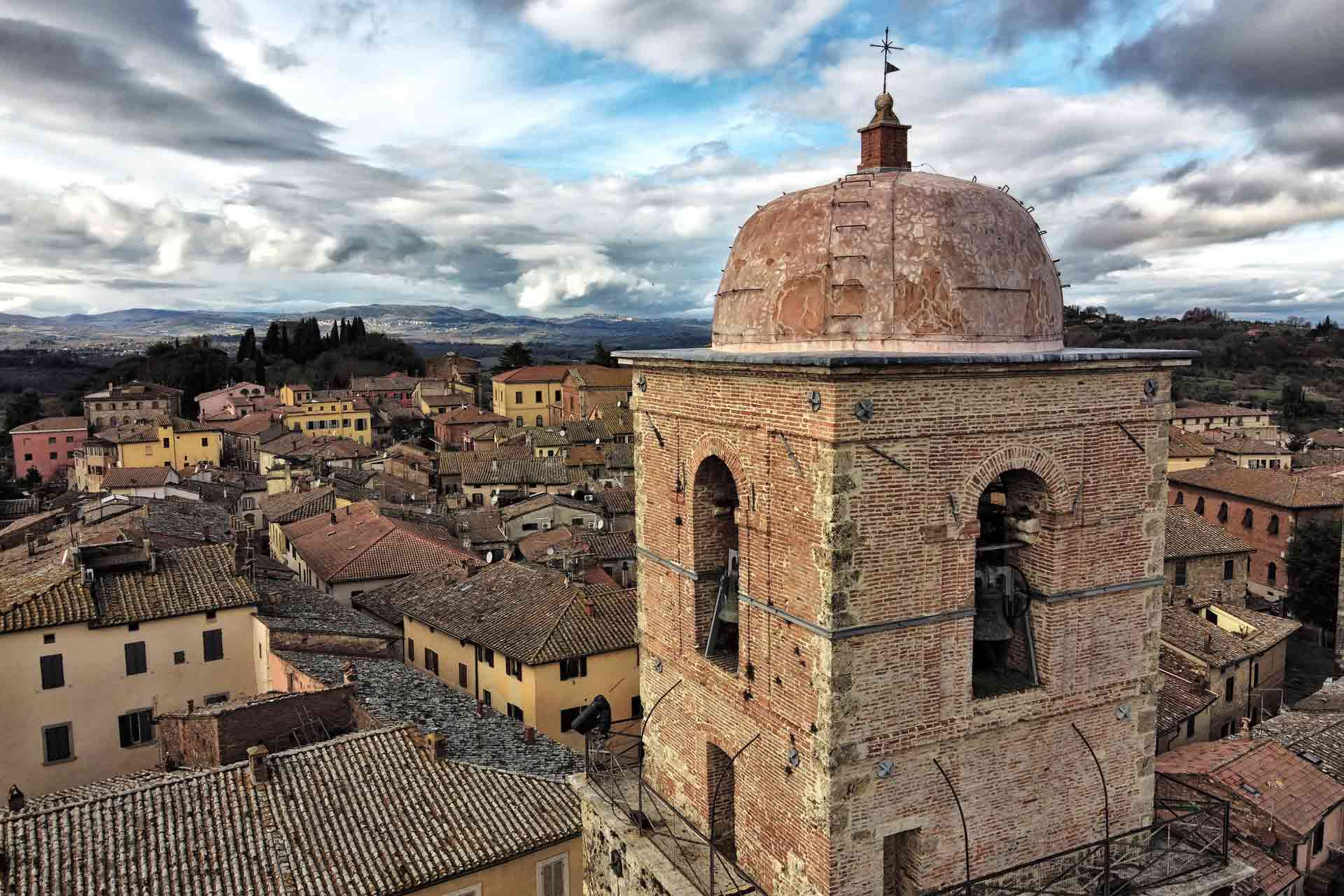
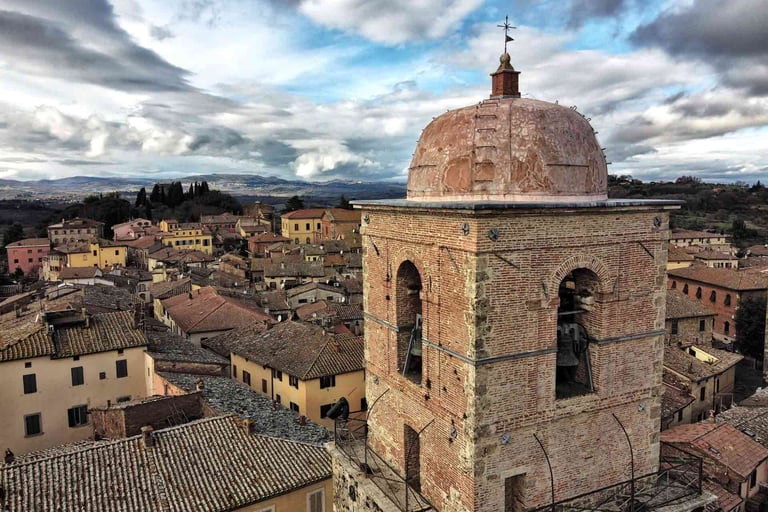
The route starts from the Cathedral Museum, descends into humid and narrow tunnels, passes beside a still-functioning Roman cistern, and climbs up to the bell tower from which you can embrace the Val di Chiana, Lake Trasimeno, and Val d'Orcia.
The National Etruscan Museum houses cinerary urns, ceramics, black bucchero pottery, and the Chiusi canopic jars: anthropomorphic vases unique in the world where Etruscans preserved the ashes of the deceased. The faces carved on the lids still have human expressions after 2,600 years.
In the historic center, the Cathedral of San Secondiano preserves 6th-century early Christian mosaics, rare in Tuscany.
🏰Podere's advice
The Labyrinth of Porsenna is a claustrophobic and fascinating experience. Bring a sweater even in summer: underground the temperature is constant at 14 degrees Celsius. Visits are guided, lasting about 45 minutes. Booking recommended on weekends.
🍽️ Where have a lunch
La Solita Zuppa Traditional Tuscan cuisine, family atmosphere. Specialties: soups and handmade pasta. In the historic center.
L'Osteria Etrusca Typical trattoria, local ingredients, informal setting. Excellent local cured meats and cheeses.
STOP 2: CHIANCIANO TERME
The Etruscans venerated Chianciano's thermal waters as a divine gift. The Romans built monumental baths here. In the Middle Ages, pilgrims and the sick traveled hundreds of kilometers to heal here.
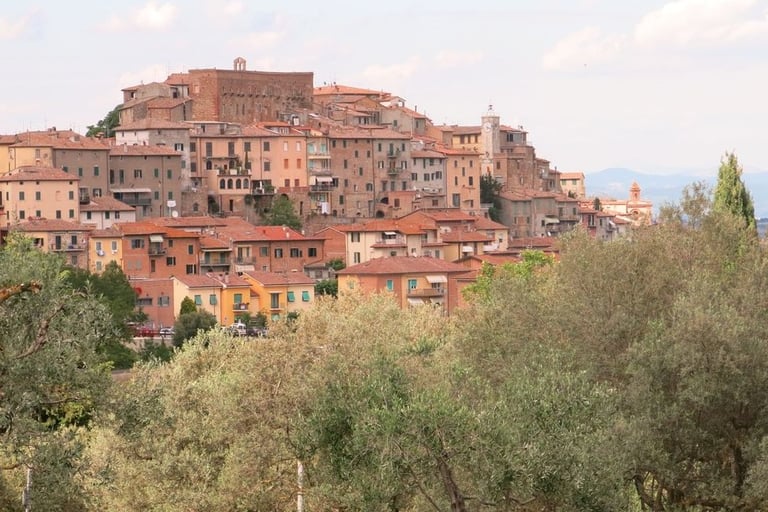
Today Chianciano is still one of Italy's most important thermal centers, but it has kept its historic soul intact: Chianciano Vecchia, the medieval village perched on the hill, preserves narrow streets, silent squares, and the Civic Archaeological Museum of Waters with Etruscan and Roman artifacts related to thermal worship.
The Terme Sensoriali and Terme Theia offer modern wellness paths: heated thermal pools, steam caves, saunas, hydromassages. Water flows at 38.5 degrees from the Sillene spring, rich in mineral salts.
💧 Thermal experience with discount with Podere Grotta Antica
Exclusive Podere Grotta Antica discount Podere guests receive 20% discount on all entrances to Terme Sensoriali and Terme Theia. Just mention when booking that you're staying at Podere.
Perfect for combining archaeology in the morning and thermal relaxation in the afternoon.
🍽️ Where have a lunch
Pizzeria Colosseo Pizzeria Colosseo Traditional pizzeria, simple setting, honest prices. In Chianciano Terme center.
🏰 Chianciano Vecchia
Go up to the medieval village (5 minutes by car from the thermal center). It's almost empty of tourists, the streets are authentic, and from the small square the view embraces all of Val di Chiana. Much more charming than the modern spas.
STOP 3: SARTEANO
Sarteano guards one of the most disturbing and spectacular Etruscan frescoes ever discovered: the Tomb of the Infernal Quadriga.
Discovered in 2003, this 4th-century BC tomb shows a red demon driving a quadriga pulled by lions and griffins toward the afterlife. The colors are still vivid after 2,400 years, the details obsessive. It's the only known representation of this myth in all Etruscan art.
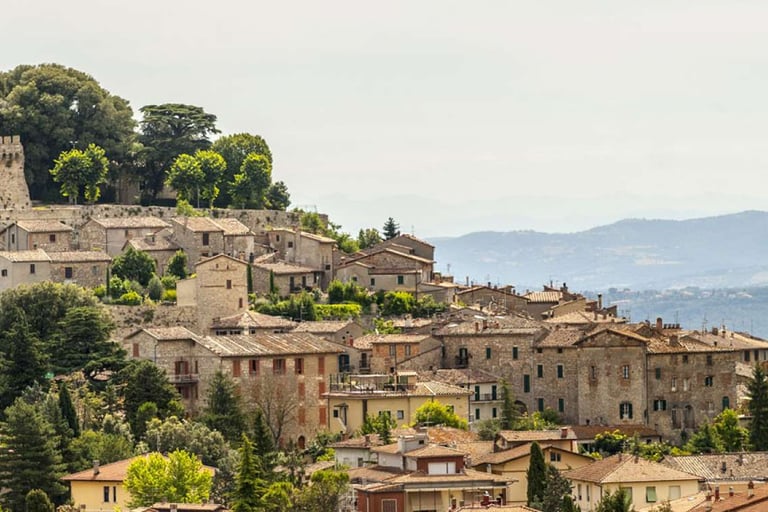
The medieval Castle from the 10th century dominates the town from above: square fortress with corner towers, massive walls, view over Val d'Orcia and Monte Amiata. It's one of the best-preserved medieval castles in Tuscany.
The historic center climbs around the castle: Piazza Bargagli with its monumental fountain, narrow paved streets, stone palaces.
🏰 The castle with a view
Climb up to the Castle: entrance is paid but cheap. From the towers the view embraces Val d'Orcia, Monte Amiata, and on clear days all the way to Lake Trasimeno. It's one of the most beautiful 360° panoramas in the area.
🍽️ Restaurants
🍽️ Locanda dei Tintori Refined Tuscan cuisine, elegant but not formal setting. In the historic center.
🍽️ Chiostro Cennini Restaurant in historic palace, creative cuisine with traditional base. Excellent local wines.
⚠️ Tomb of Infernal Quadriga
SATURDAYS ONLY The tomb is open exclusively on Saturdays with guided tours by reservation. If you can't go on Saturday, visit the Archaeological Museum: there's a faithful reconstruction of the fresco and all the tomb's artifacts. It's not the same thing, but it's still extraordinary.
Reservations: Civic Archaeological Museum of Sarteano.
STOP 4: CETONA
Cetona is one of Tuscany's most beautiful medieval villages, but its history begins much earlier: 40,000 years ago, when Neanderthal Man inhabited the caves of Monte Cetona.
The Belverde Archaeological Nature Park preserves these prehistoric caves along with a nature trail through oak and holm oak woods. The Civic Museum for the Prehistory of Monte Cetona displays artifacts found in the cavities: stone tools, worked bones, traces of fires lit tens of thousands of years ago.
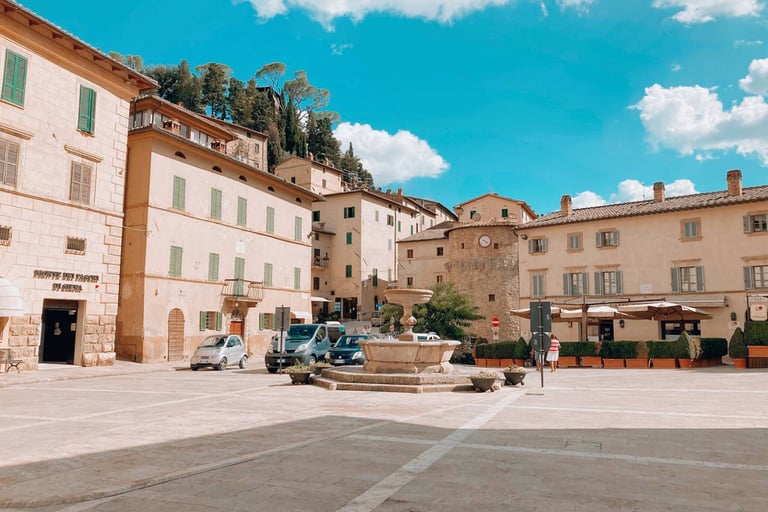
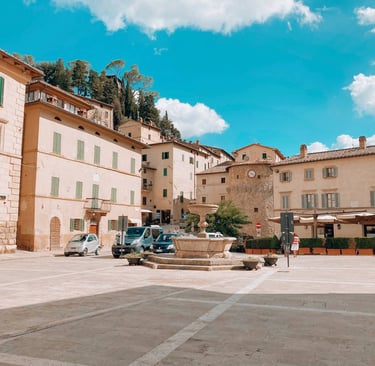
But Cetona is above all pure beauty: the medieval village climbs around the fortress that dominates from above, Piazza Garibaldi is a stone living room with porticos and Renaissance palaces, the streets are flowered and maintained like a garden.
Here time flows more slowly. Tourists are few. The atmosphere is that of authentic Tuscany that everyone seeks but few find.
🌳 The Archaeological Nature Park
The park is immersed in the forest, accessible by a walking path of about 2 km (easy). The caves aren't always visitable internally, but even just walking among centuries-old oaks knowing that humans lived there 40,000 years ago is a striking experience.
Paid entrance. Guided tours available.
🏰 Cetona
Cetona is one of the most photogenic villages Dedicate at least an hour to getting lost in the streets. Every corner is well-maintained, every alley has flowers at the windows, every square has a historic palace. It's postcard Tuscany, but real.
Restaurant
Da Nilo Hamburgeria e pizzeria. Informal atmosphere, honest prices. Perfect for a quick break.
STOP 5: SAN CASCIANO DEI BAGNI
In November 2022 the archaeological world exploded: beneath the thermal waters of San Casciano dei Bagni, the Rediscovered Sanctuary was discovered, an Etruscan-Roman sanctuary complex with over 24 bronze statues in perfect condition.
It's the most important discovery in Italy since the Riace Bronzes. Some statues are almost a meter tall, details are intact, inscriptions in Etruscan and Latin are readable. In 2024 new wonders emerged: a "sea of bronze serpents" at the point where sacred water flowed, a statue of a child priest with a divination ball that still rotates between his fingers.
The Etruscans and then the Romans venerated these waters as divine. When Christianity took hold in the 5th century AD, instead of destroying the pagan sanctuary they sealed it with respect: they closed the pools with stone columns and entrusted the statues to the water, where they remained intact for 1,600 years.
The Rediscovered Sanctuary can be visited with tours organized by the Archaeological Group of San Casciano dei Bagni. The statues will be displayed in a museum that will be built in a 16th-century palace in the historic center. In the future there will be a visitable archaeological park.
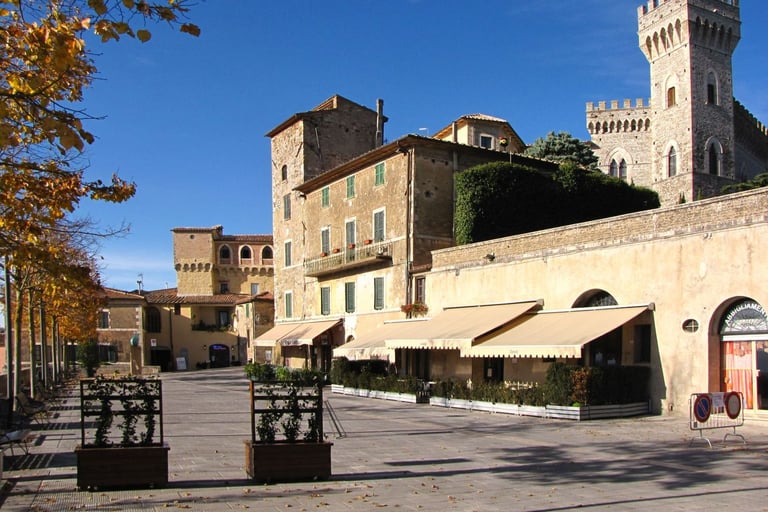
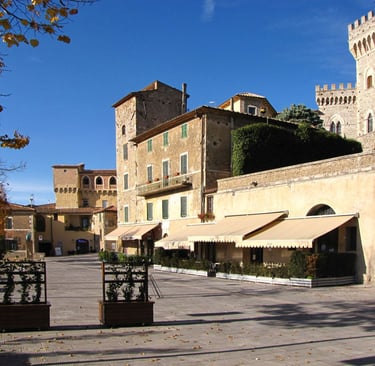
The village itself is worth it: medieval historic center, free thermal baths accessible for free (stone pools where hot natural water flows), peaceful atmosphere.
🏛️ The Rediscovered Sanctuary
guided tour required The archaeological site can be visited ONLY with tours organized by the Archaeological Group of the Municipality. Reservation required.
Info and bookings: Municipality of San Casciano dei Bagni or official site sancascianoliving.it
This is an unrepeatable experience: seeing live an active archaeological excavation with finds that are rewriting Etruscan history.
💧 The free thermal baths
After the archaeological visit, go down to the free thermal baths (free, accessible year-round). They're stone pools where natural thermal water flows at 40 degrees. Bring swimsuit and towel. It's an authentic, local experience that few tourists know about.
BONUS WINE EXPERIENCE: COLLE DI SANTA MUSTIOLA
🍷 Unique tasting in Etruscan cellar
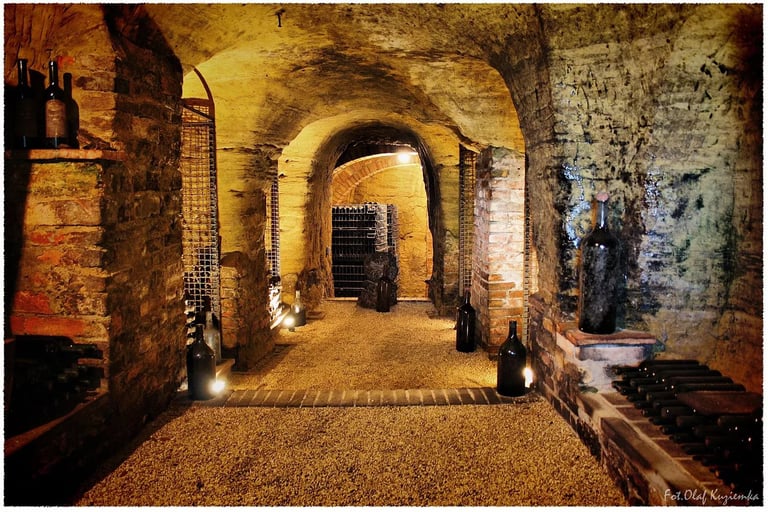
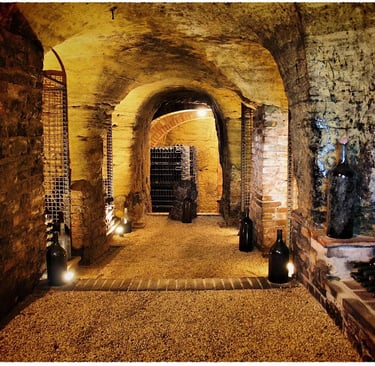
Between Chiusi and Sarteano, the Cantina Colle di Santa Mustiola offers an experience no one else can replicate: tasting of exceptional wines in cellars carved into Etruscan tombs.
The underground tufa galleries where wine ages today were originally Etruscan burials. Tasting Rosso di Montepulciano or Chianti surrounded by 2,500-year-old burial niches is an experience that unites archaeology and enology in a unique way.
Colle di Santa Mustiola is a Podere Grotta Antica partner: we organize exclusive tastings for our guests. Visits by reservation, last available time 5:00 PM.
Perfect as a closing stop or enological break between Chiusi and Sarteano.
PRACTICAL INFO
📍 Distance from Podere
Chiusi: 1 km (5 minutes!)
Chianciano: 15 min
Sarteano: 20 min
Cetona: 25 min
San Casciano: 35 min
Podere Grotta Antica is practically inside the Etruscan Triangle. No other agriturismo in the area has this strategic proximity.
⏱️ Recommended duration
Two days to see everything calmly
Or one intense day skipping Chianciano Terme.
Each archaeological site requires at least 1-2 hours. Villages deserve breaks. Tastings aren't done in a rush.
📅 When to go
Year-round, but pay attention to:
Infernal Quadriga Tomb: SATURDAYS ONLY
Colle Santa Mustiola: Reservation required, last time 5:00 PM
Rediscovered Sanctuary: Guided tours by reservation
Organize in advance if you want to see everything.
Ready to descend into the bowels of Etruscan civilization?
Start from Podere Grotta Antica: you're already inside the Etruscan Triangle.