
From Orvieto to Civita di Bagnoregio
One day between two wonders of central Italy: the Etruscan city perched on a cliff with Umbria's most beautiful cathedral, and the medieval village literally disappearing. Two worlds, one unforgettable day
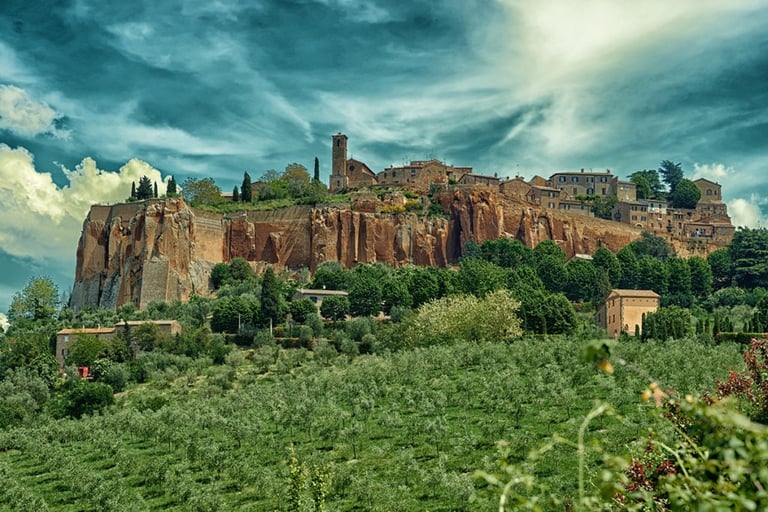
Two places that seem straight out of a fairy tale. Orvieto, perched on a tuff cliff, with a Cathedral that when you see it you understand why they called it "the golden lily of cathedrals." And Civita di Bagnoregio, the dying town: it's literally disappearing due to erosion, and you reach it walking on a bridge suspended in the void.
They're very close to each other (20 minutes by car) and to Podere. A perfect tour for those who want to see two different faces of medieval Italy: the powerful and wealthy city, and the tiny village resisting oblivion.
Between Golden Cathedrals and Dying Towns
From Orvieto to Civita di Bagnoregio in one day: magnificent Gothic cathedral, St. Patrick's Well, the dying town on a tuff spur. Complete itinerary with practical tips, what to see and where to eat.
MORNING: ORVIETO, THE CITY ON THE CLIFF
Orvieto is perched on a tuff cliff at 325 meters. Park in one of the paid parking lots below (Campo della Fiera is the most convenient, €1/h) and take the funicular that climbs to the center in 2 minutes. Costs €1.30 and is an experience itself: crazy view of the valley as you climb.
Alternatively you can park in the center (Duomo Parking, €1.50/h) but it's smaller and fills quickly.
📍 Podere's tip
Enter the Cathedral, even just 10 minutes. But if you have time, pay €5 for the San Brizio Chapel: those frescoes are an absolute masterpiece.
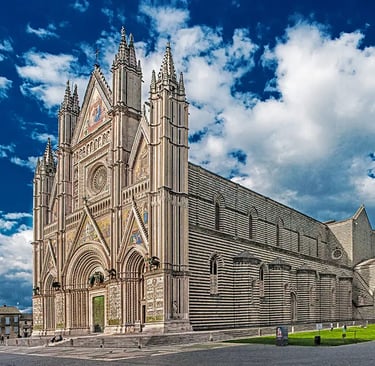
1.Orvieto Cathedral
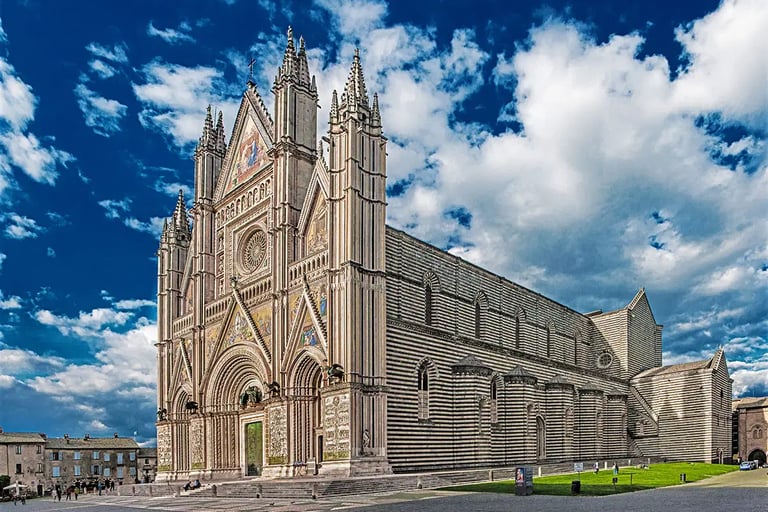
You emerge in Piazza del Duomo and... wow. The façade is an explosion of golden mosaics, sculptures, pinnacles, rose windows. It's like a vertical illustrated book: they tell biblical stories carved and painted. When the sun hits the golden mosaics, you understand why they called it "golden lily."
The Cathedral was started in 1290 to house the Corporal of the Miracle of Bolsena (a host that bled during mass, a Eucharistic miracle that convinced the Pope of the time). They called the best artists of the era to make it, and it shows.
What to see inside:
- Chapel of San Brizio: Frescoes by Luca Signorelli on the Last Judgment. Michelangelo studied them before doing the Sistine Chapel. Demons, damned, angels, painted apocalypse. It's disturbing and beautiful.
- Chapel of the Corporal: Where they keep the miracle relic
- Stained glass and organ: Majestic
Gem: Behind the Cathedral, on the right, there's a panoramic point from which you see the entire Umbrian valley. Few tourists go there. It's there, free, and the view is absurd.
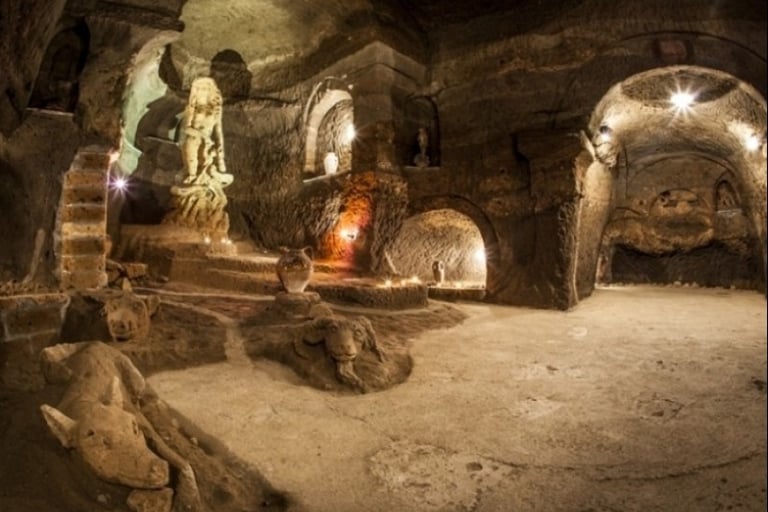
2. Orvieto Underground
Under Orvieto there are over 1200 caves, tunnels, cisterns carved in the tuff by the Etruscans 2500 years ago. They were used for everything: cellars, oil mills, dovecotes (they raised pigeons for meat), shelters during wars.
The Orvieto Underground tour takes you 40 meters under the city to see this hidden world. Lasts 45 minutes, in Italian and English, and makes you understand how many lives this city has had.
Info:
- Departure from Piazza Duomo 23
- Tours every hour
- www.orvietounderground.it
📍 Podere's tip
If you have time, do it. It's different from everything. Walking in the city's entrails carved by Etruscans is surreal.
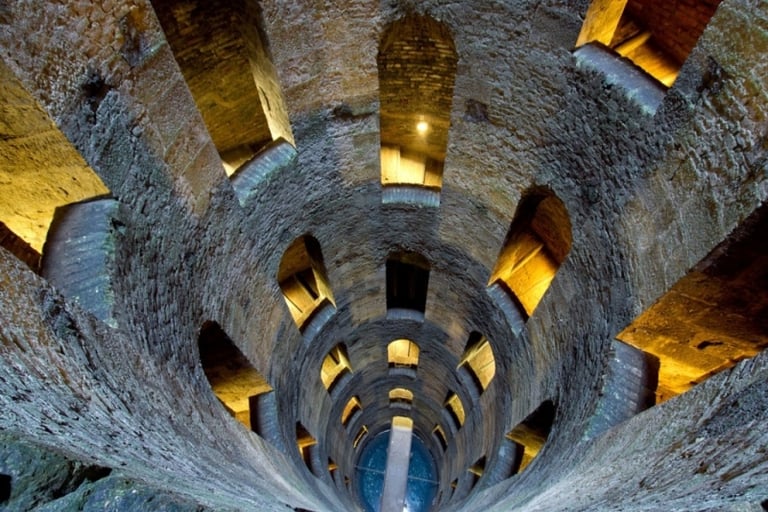
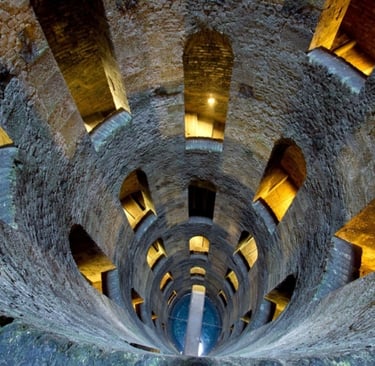
3. St. Patrick's Well
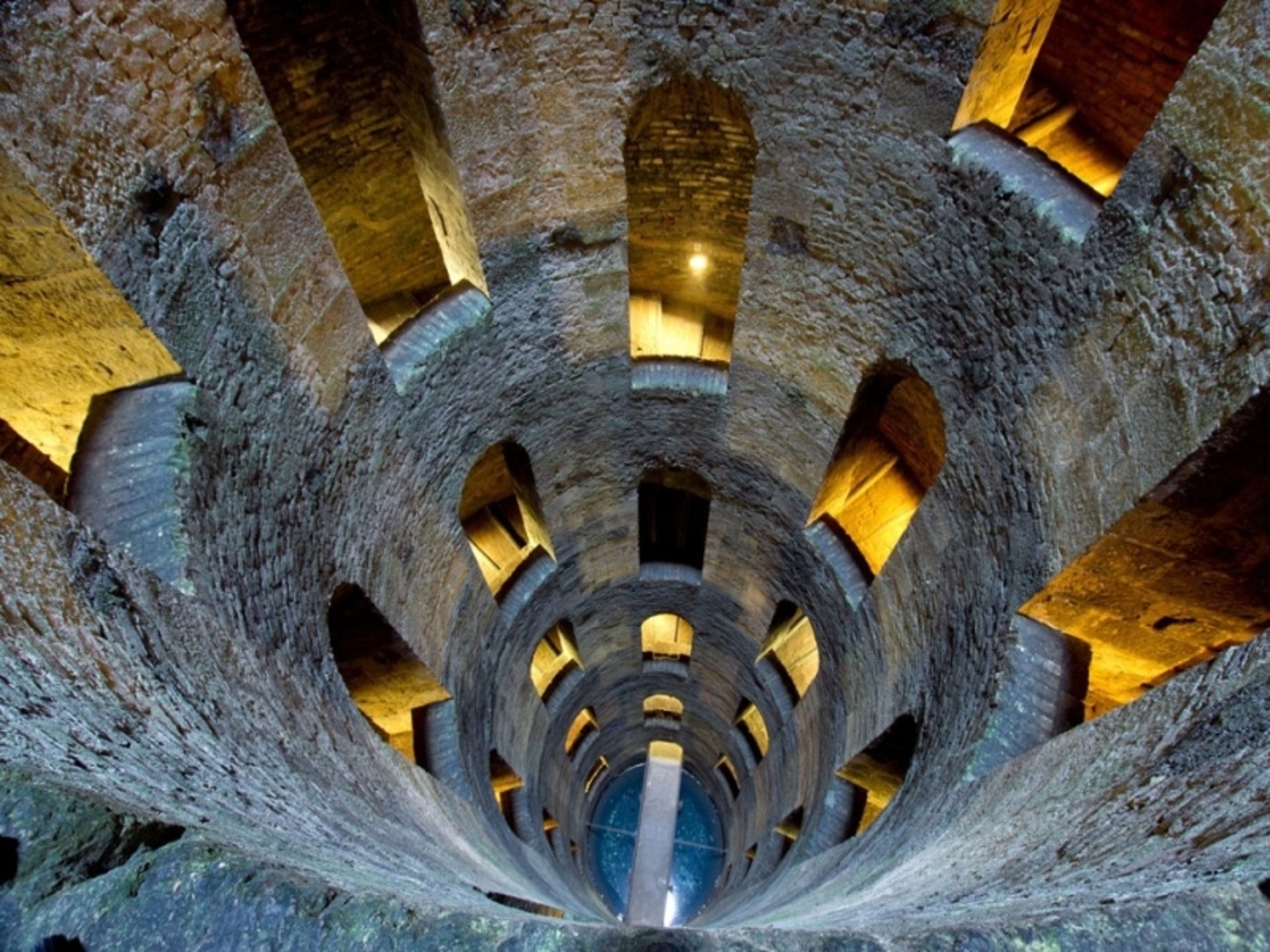
This well is engineering madness. 62 meters deep, carved in tuff, with two independent spiral staircases (one to go down, one to go up) that never cross. It was built to guarantee water to the city in case of siege.
You can descend to the bottom (248 steps down, 248 up). At the bottom there's still water today. The stairs are wide, lit, but it's still a trip: you descend into the earth for 5-10 minutes.
Info:
- Open daily
- Bring sweater (below it's cool even in summer)
Gem: The name comes from St. Patrick, who in Ireland supposedly found a cave leading to Purgatory. This well seemed equally deep and mysterious, hence the name.
📍 Podere's tip
If you suffer from claustrophobia, skip. Otherwise it's a unique experience. And the view from above (from the edge, free) is already beautiful.
📍 Podere's tip
If you've already climbed St. Patrick's Well, you can skip (it's still 250 more steps). But if you want the perfect panoramic photo, climb.
4. Torre del Moro
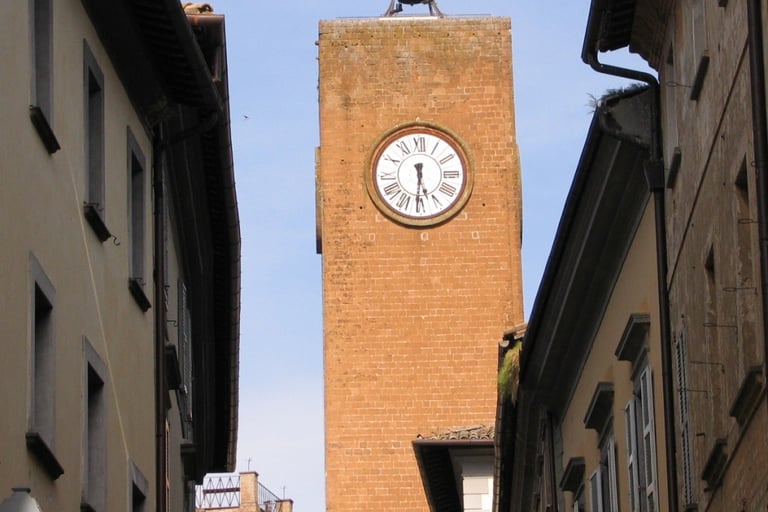
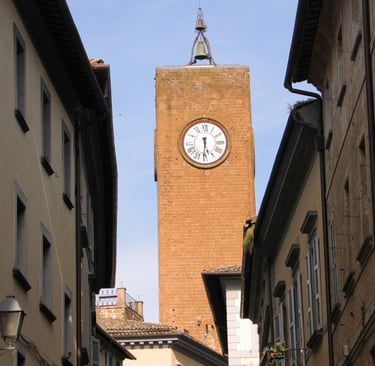
In Orvieto's center there's the Torre del Moro (47 meters). Steep climb (250 steps), but the view from above is spectacular: you see the Cathedral from above, the Umbrian countryside, and you realize how much Orvieto is truly perched.
✨ LUNCH BREAK
Orvieto has a strong gastronomic tradition. Poor Umbrian dishes, game, truffle, and of course wine.
Where to eat:
- Trattoria del Moro Aronne (Via San Leonardo 7): Historic, authentic, traditional dishes. Wild boar, pigeon, homemade pasta. Honest prices.
- Trattoria La Palomba (Via Cipriano Manente 16): Small, family-run. Umbrichelli with truffle, rabbit, lamb. Reservation needed.
- Osteria dell'Angelo (Piazza XXIX Marzo): In the center, good cuisine, relaxed atmosphere.
Dishes to try:
- Umbrichelli (thick fresh pasta like pici)
- Palomba alla ghiotta (stewed pigeon)
- Wild boar stew
- Torta al testo with cured meats and cheeses
📍 Podere's tip
Avoid restaurants directly on Piazza Duomo (touristy and expensive). Move 2 streets away and find authenticity and better prices.
AFTERNOON: CIVITA DI BAGNOREGIO, THE DYING TOWN
From Orvieto to Civita di Bagnoregio it's 20 km, 20 minutes by car. Scenic road crossing the countryside between Umbria and Lazio.
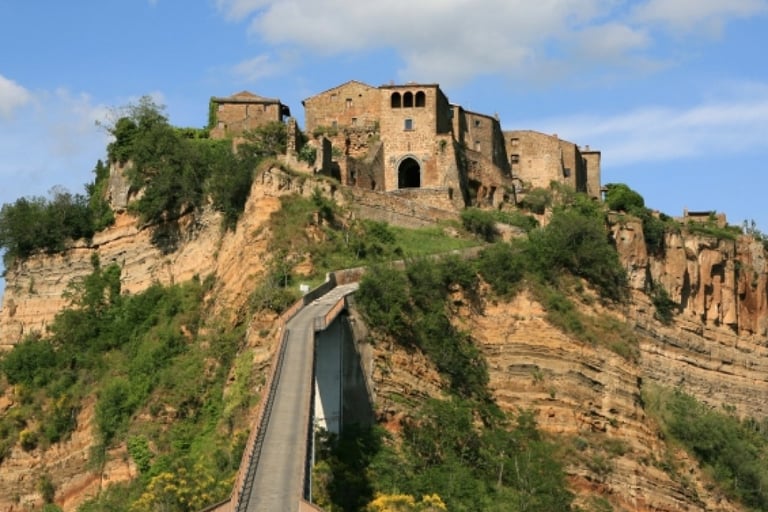
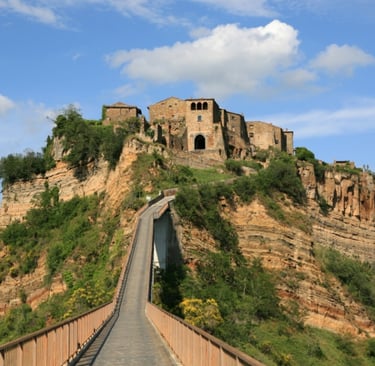
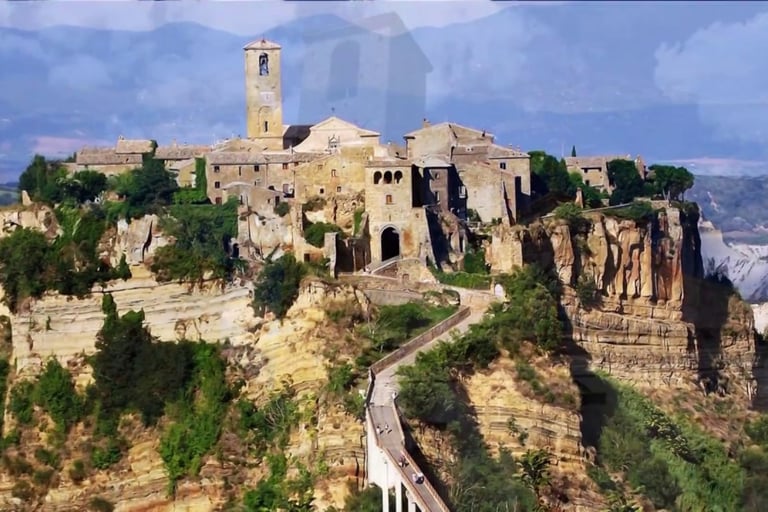
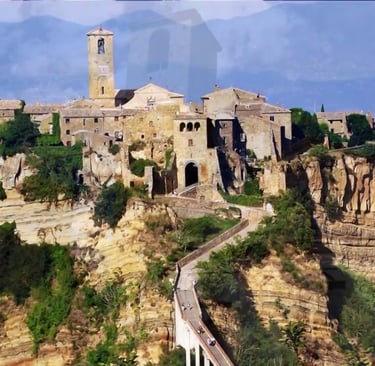
You park in the new town of Bagnoregio (municipal parking, €3-5/day) and from there... you immediately see THE SPECTACLE: Civita, perched on a tuff spur literally crumbling, connected to the world by a very long pedestrian bridge.
📍 Podere's tip
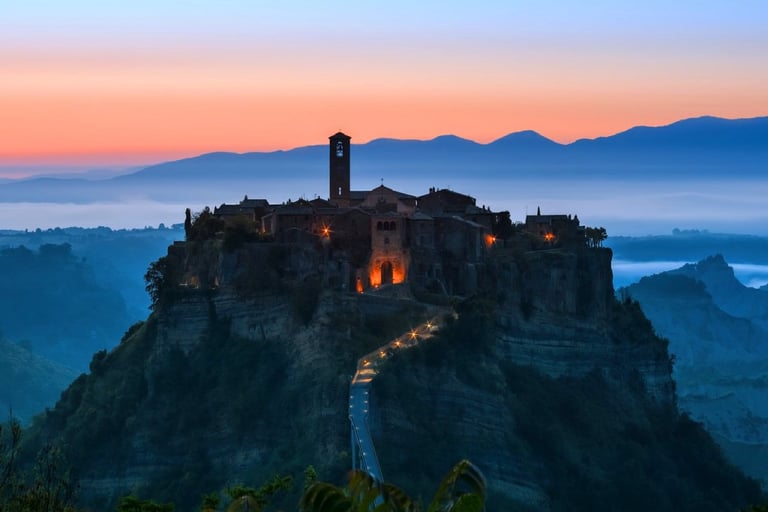
Go in late afternoon (4-6 PM). Fewer tourists, better light for photos, more magical atmosphere. And if you can stay until sunset, it's a show.
5. Civita di Bagnoregio: The Dying Town
Civita di Bagnoregio is called "the dying town" because the tuff spur on which it's built is crumbling from erosion. Every year it loses pieces. One day, maybe in 100 years or maybe in 500, it won't be there anymore.
The bridge: To reach Civita you must walk on a 300-meter pedestrian bridge suspended over the calanchi valley (tuff erosions creating lunar landscapes). The walk is uphill, 10 minutes, but the view is surreal.
The village: Civita has 10-15 permanent residents (yes, ten). In summer it fills with tourists, but the structure is intact medieval: narrow streets, stone houses, central square with church. It's tiny: you walk around it in 30 minutes going slow.
What to see:
- Church of San Donato: Small, Romanesque, with wooden crucifix
- Birthplace of St. Bonaventure (medieval philosopher and theologian)
- Belvedere: Views over the calanchi valley (crazy)
- Porta di Santa Maria: Medieval entrance to the village, with two Etruscan lions on the sides
Gems:
- Civita has been a set for many films and advertisements (including one by Dolce & Gabbana)
- The geologist who first studied the erosion said: "This village will die." Hence the name.
- In winter, with fog, Civita looks like an island suspended in nothingness

6. The view of Civita from outside
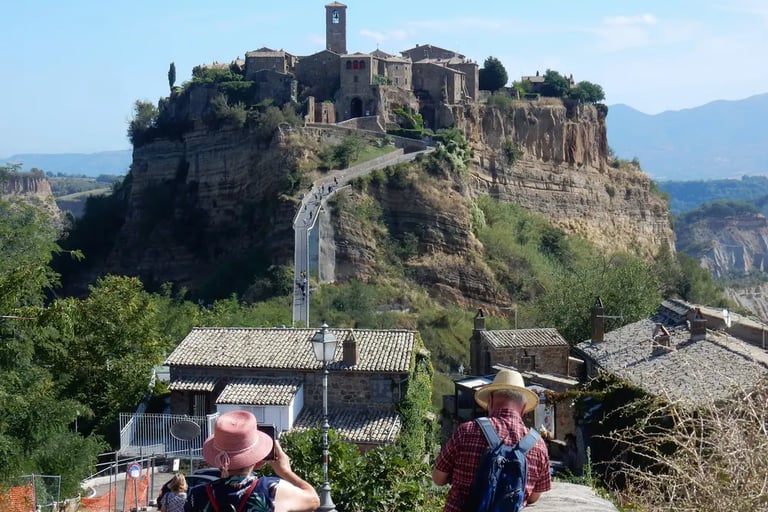
Before going to Civita (or after), stop at the Bagnoregio Belvedere, a panoramic point in the new town from which you see Civita from above. It's the postcard view: the village on tuff spur, the bridge, the calanchi valley.
There's a bar (Belvedere) where you can have an aperitivo with a view. Spritz with Civita in front. Not bad.
📍 Podere's tip
Mandatory photo from here. It's the classic view you saw on Instagram.
BONUS: IF YOU HAVE MORE TIME
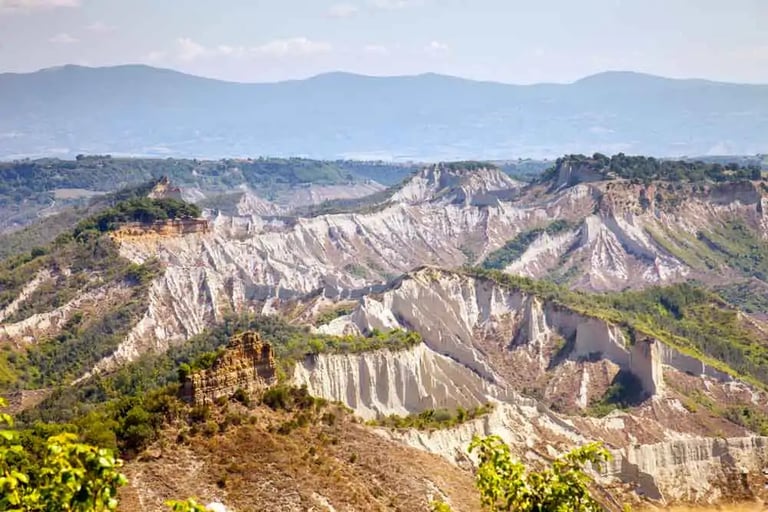
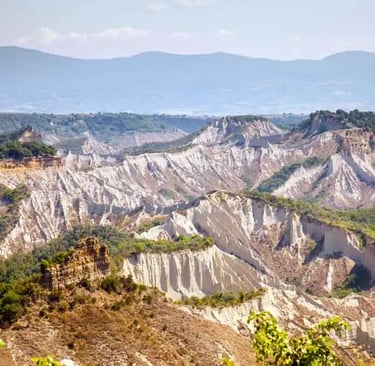
Around Civita there are the calanchi, tuff erosions creating an almost Martian landscape: ridges, gorges, colors ranging from gray to red. If you like walking, there are trails descending into the valley (marked from Bagnoregio parking).
Lubriano
Tiny village (500 inhabitants) 5 km from Civita. Overlooks the same calanchi valley, much less touristy. If you want to see Civita from another perspective without crowds, go there.
PRACTICAL INFORMATION
📍 Distance from Podere
- Chiusi → Orvieto: 40 km (35 min)
- Orvieto → Civita: 20 km (20 min)
- Chiusi → Civita: 50 km (45 min)
Perfect for loop day: Chiusi → Orvieto (morning) → Civita (afternoon) → Chiusi
⏱️ Final tips
✅ Civita in late afternoon: Fewer people, better light
✅ Comfortable shoes: Orvieto is uphill, Civita has bridge + steps
✅ Book lunch in Orvieto: Small trattorias, they fill up
✅ Bring camera: Civita is THE photo of the trip
✅ Check weather: Civita with strong wind may be closed (bridge safety)
🌅 When to go
✅ Spring (April-May): Green countryside, perfect weather
✅ Autumn (September-October): Harvest, warm colors
⚠️ Summer (July-August): Hot (30°C+), crowds at Civita
❌ Winter: Civita may be closed for snow/ice (check first)
Two wonders 40 minutes from Podere.
A city on the golden cliff. A village disappearing. A perfect day.