Siena
The city of the Palio
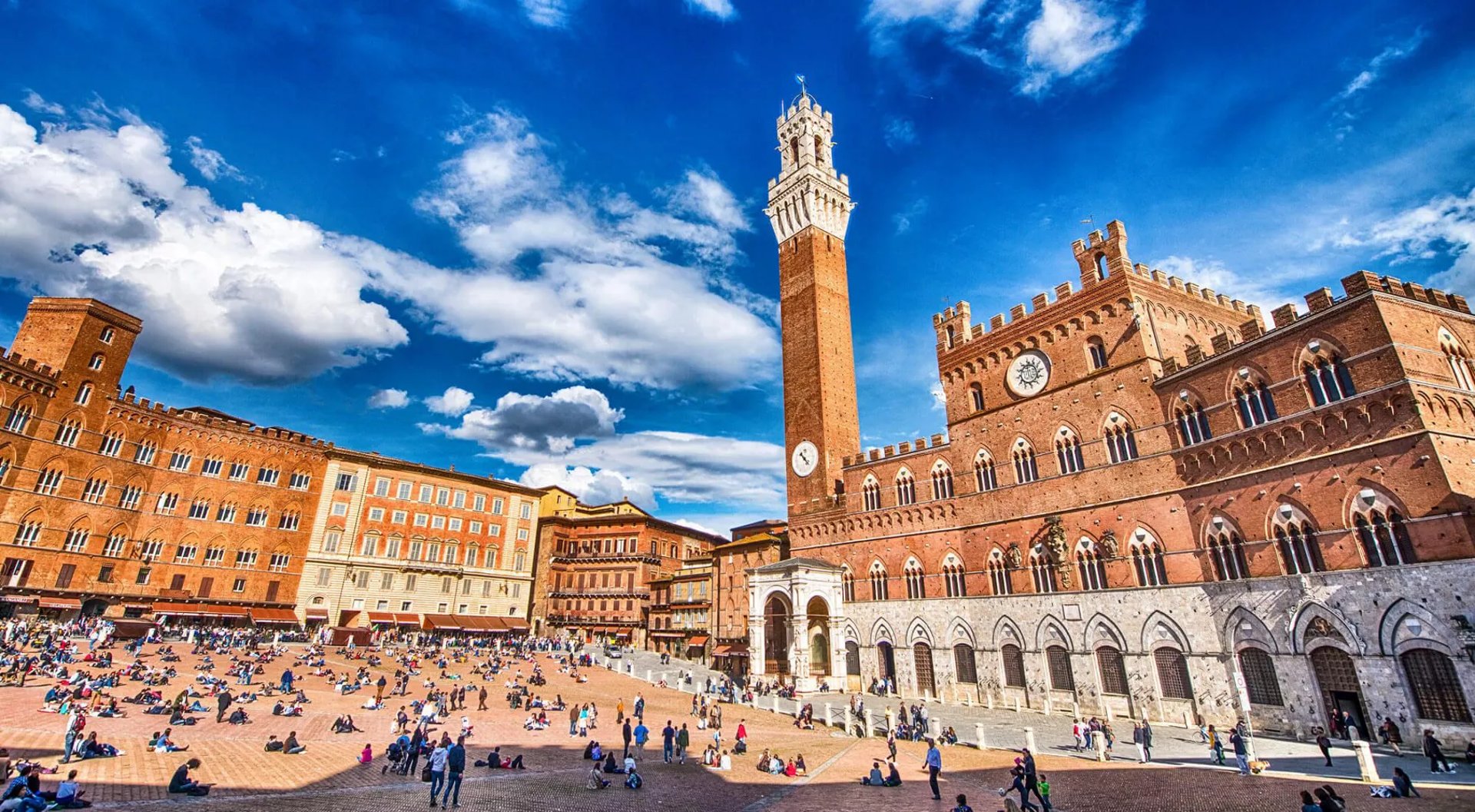
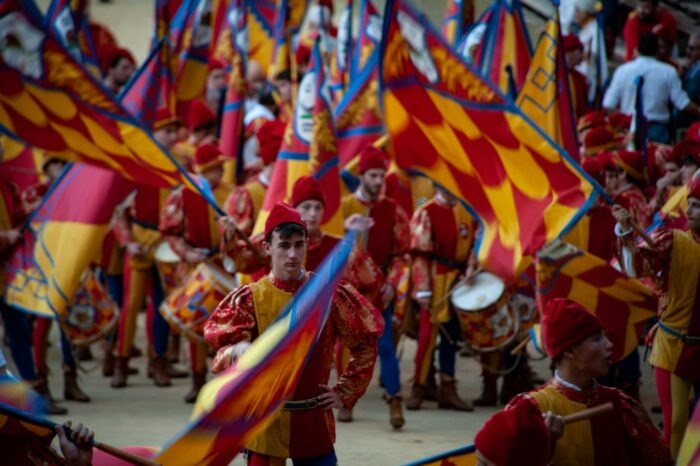
Siena is a medieval masterpiece suspended in time. The UNESCO historic center welcomes you with cobblestone alleys, red brick palaces, and the famous shell-shaped Piazza del Campo. Here history isn't told, it's lived: the Palio isn't a tourist show but the beating heart of the city, where 17 contrade (neighborhoods) have been challenging each other for centuries in a race that stops time.
This itinerary takes you to discover authentic Siena: from the artistic wonders of the Cathedral and Palazzo Pubblico to secrets hidden in its alleys, passing through the places of Saint Catherine and the unique atmosphere only this city can offer.
MORNING: PIAZZA DEL CAMPO AND PALAZZO PUBBLICO
Piazza del Campo
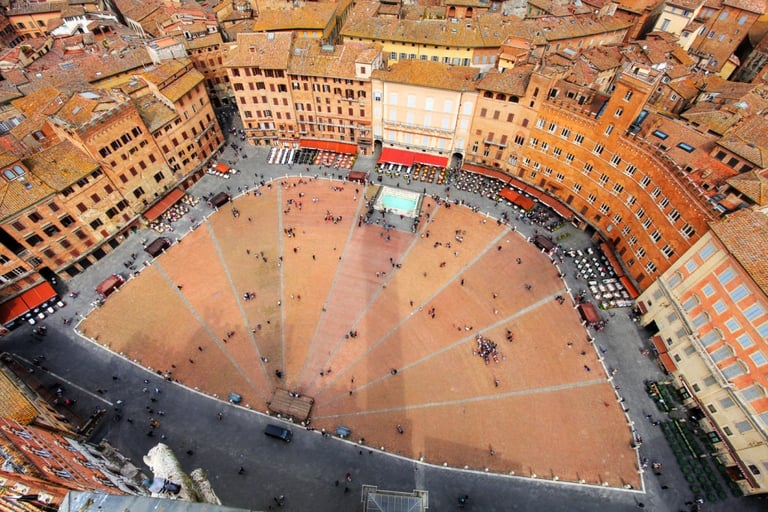
Start from Italy's most beautiful square. The shell shape with 9 sections represents the Government of Nine that made Siena powerful in the Middle Ages. The red brick and white travertine pavement creates a design that seems to slide toward Palazzo Pubblico. Twice a year (July 2nd and August 16th) this square transforms into the arena of the Palio, Italy's oldest and most heartfelt horse race. In the center you'll find Fonte Gaia, a nineteenth-century copy of Jacopo della Quercia's Renaissance fountain. At the foot of the Tower stands the Cappella di Piazza, built as thanksgiving after the 1348 plague.
Palazzo Pubblico and Museo Civico
Enter the heart of medieval Sienese power. The Civic Museum houses absolute masterpieces: Simone Martini's Maestà (Mappamondo room) and Ambrogio Lorenzetti's Allegory of Good and Bad Government, one of the most important secular frescoes of the fourteenth-century Europe. These works aren't just art: they're political manifestos showing rulers the effect of their choices on the city. The Loggia dei Nove on the back offers breathtaking views of Orto dei Pecci.
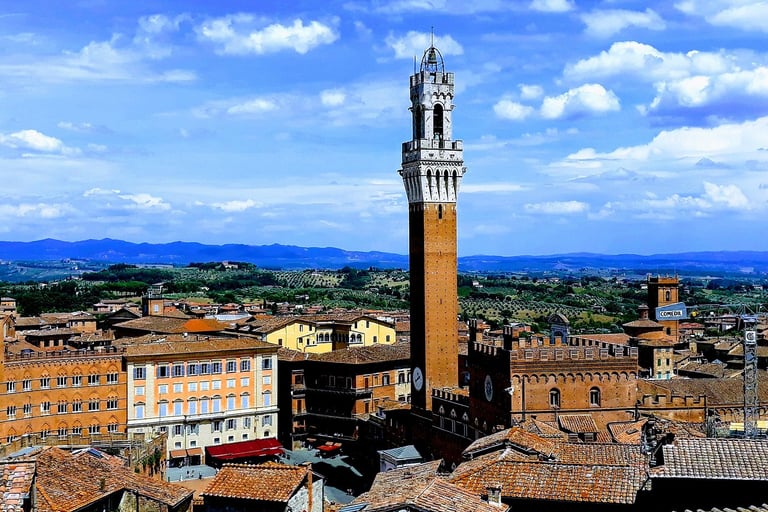
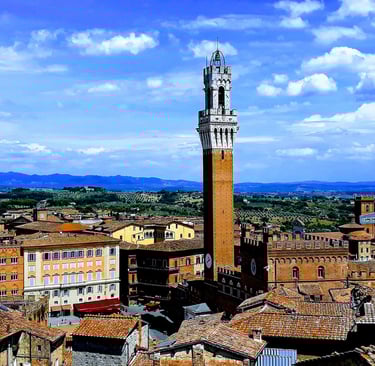
Torre del Mangia
Climb the 400 steps (separate ticket) for a 360° panorama of Siena and the Tuscan hills. The tower is 102 meters high and is the third tallest in Italy. The curious name comes from the first bell-ringer Giovanni di Duccio, nicknamed "Mangiaguadagni" (Profit-eater) for his spendthrift ways. At the top you'll find Sunto, the 1666 bell that rings during crucial Palio moments: its characteristic crack (repaired in 1831) gives it the deep, hoarse sound that moves every Sienese.
📍 Podere's Advice
Climb the Tower early (opens at 10 AM) to avoid queues. The combined ticket Museum + Tower + Santa Maria della Scala is convenient if visiting all three.
LATE MORNING: THE CATHEDRAL AND ITS TREASURES
Cathedral of Santa Maria Assunta
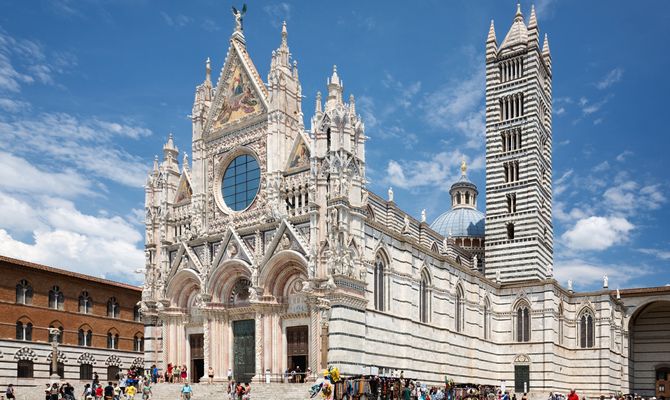
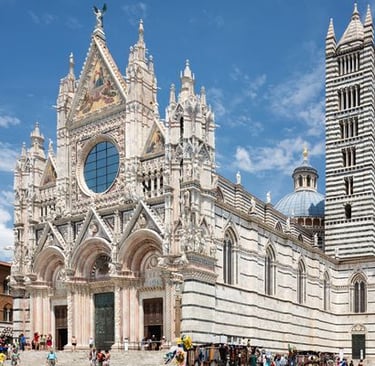
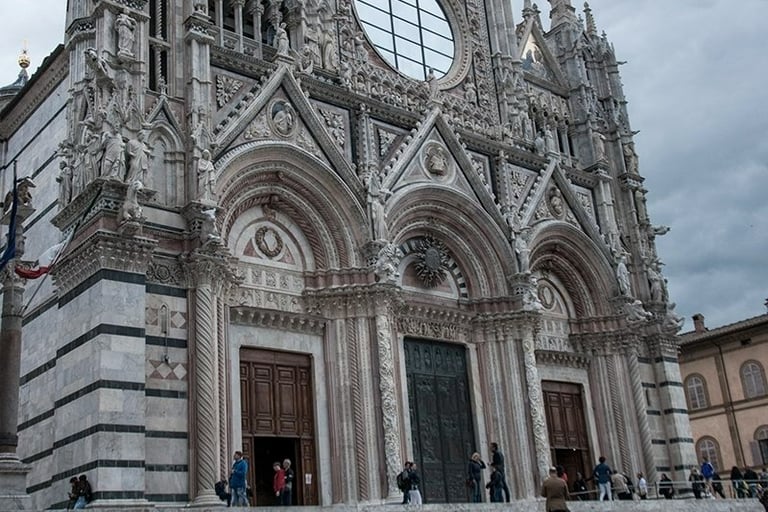
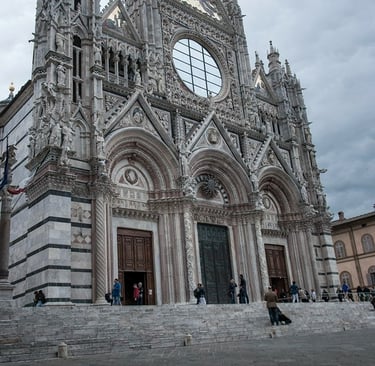
Siena's Cathedral takes your breath away. The white and black striped exterior (the city's colors) announces the interior wonders. The marble inlay floor is a unique work: 56 panels created between the fourteenth and nineteenth centuries by 40 artists, an illustrated Bible at your feet. It's only uncovered in summer-autumn to preserve it from wear. Look up: striped columns, busts of Sienese popes, works by Pisano, Donatello, and Michelangelo. In the left nave opens the Piccolomini Library with Pinturicchio's frescoes narrating Pope Pius II's life: vivid colors, gold and blues that seem painted yesterday.
Gate of Heaven
If available (seasonal), book the Cathedral rooftop tour. You walk above the vaults, discover hidden architecture, and enjoy a unique view of Siena and the countryside. An experience few know that adds magic to the visit.
Museum Complex
The single ticket includes Baptistery (Renaissance baptismal font by Donatello and Ghiberti), Crypt (fourteenth-century frescoes rediscovered in 1999), Opera Museum (Duccio's Maestà, original sculptures by Giovanni Pisano), and Facciatone. The latter is the unfinished facade of the New Cathedral, a pharaonic project stopped by the 1348 plague: today it offers spectacular city views.
📍 Podere's Advice
Check if the floor is uncovered (summer-autumn). Gate of Heaven must be booked in advance with limited spots. Facciatone has steep stairs but the view is worth every step.
LUNCH BREAK
Taverna di San Giuseppe (Via Giovanni Duprè 132)
Descend into the Etruscan cellar carved in tuff and be conquered by revisited traditional cuisine. Pici with Chianina ragù, pappa al pomodoro, winter ribollita, and house desserts. The medieval atmosphere is as authentic as the flavors.
Osteria Le Logge (Via del Porrione 33)
Historic place near Campo, perfect balance between tradition and gourmet creativity. Excellent Sienese wine list.
Grattacielo (Via dei Pontani 8)
Siena's oldest osteria (1840), small and characteristic. The name comes from the very low ceiling you can "scratch." Simple, abundant, authentic dishes. Book ahead.
🌲 Podere's advice
Sienese osterias serve generous portions. If you have an intense afternoon ahead, opt for lighter dishes.
AFTERNOON: SANTA MARIA DELLA SCALA AND CONTRADE
Santa Maria della Scala Museum Complex
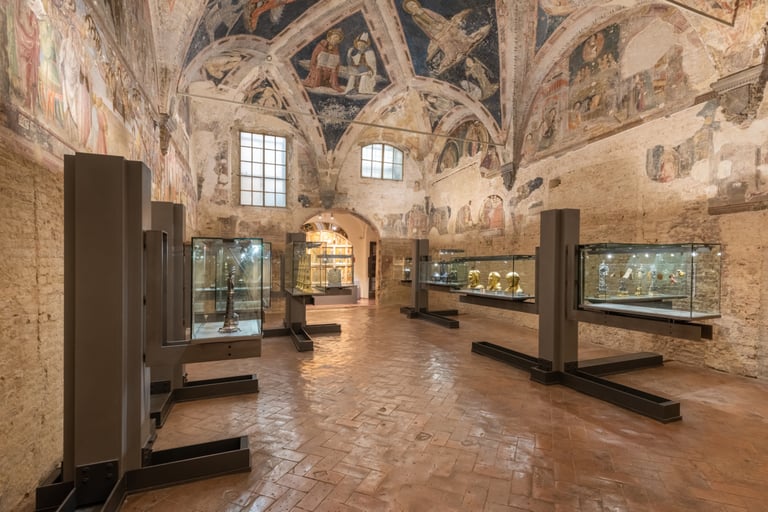
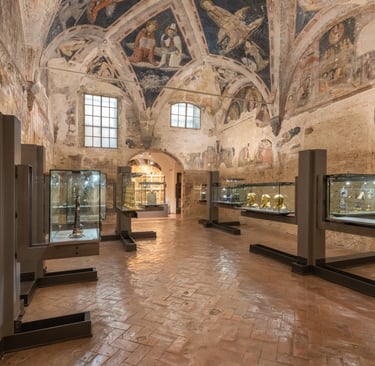
Opposite the Cathedral rises one of Italy's most fascinating cultural complexes. This ancient medieval hospital (active until 1995) develops over 7 levels descending into the hill. The Pellegrinaio Hall with fifteenth-century frescoes by Domenico di Bartolo tells hospital life: a moving historical document. Descend into underground tunnels carved in sandstone for the National Archaeological Museum. The Corticella houses the Treasure: gold and silver relics purchased in Constantinople in 1359 for 3000 florins (the price of a palace!). The Children's Art Museum makes the place perfect for families too.
The 17 Contrade
Siena isn't just a city: it's 17 small homelands. Every Sienese is born in a contrada and remains faithful to it for life. Walking through the center you'll discover contrada fountains, coats of arms on buildings, oratories. The contrade have museums displaying Palio banners won, historical parade costumes, and historical relics. Entrance is free but must be requested in advance (7 days). In winter (December-January) some organize "InContrada," guided tours of their secret spaces.
📍 Podere's advice
First Sunday of the month Santa Maria della Scala is free. If visiting during Palio days, the city transforms: contrade open kitchens for propitiatory dinners (invitation-only access but the atmosphere can be felt everywhere).
LATE AFTERNOON: SAN DOMENICO BASILICA AND SAINT CATHERINE
Basilica Cateriniana di San Domenico
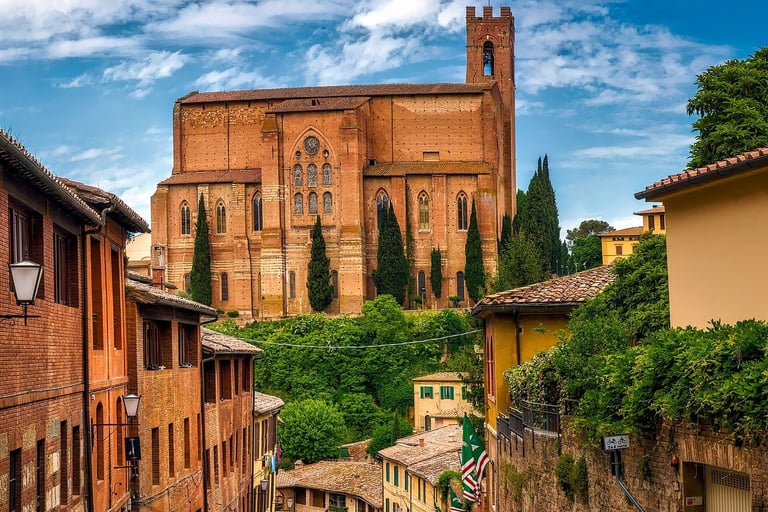
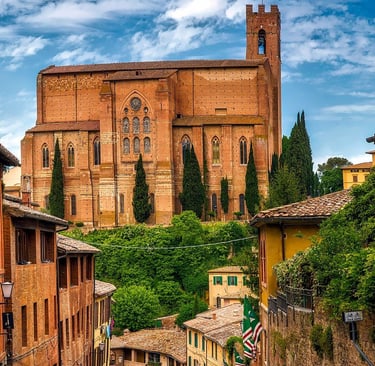
On Camporegio hill rises this imposing Gothic brick basilica (1226-1465). It's the place where Saint Catherine lived the most intense moments of her spiritual life. In Saint Catherine's Chapel (right nave) is kept the saint's head-relic, brought from Rome in 1383 and preserved in a silver reliquary. Sodoma's frescoes recount her ecstasies and miracles. In the Cappella delle Volte (raised in the counter-facade) you can see Andrea Vanni's fresco portraying her: the only portrait made while she was alive. Other extraordinary works: Guido da Siena's Maestà, Francesco di Giorgio Martini's Adoration of the Shepherds.
Saint Catherine's House Sanctuary
Descend toward Fontebranda (10-minute walk) to visit the saint's birthplace, transformed into a sanctuary. The oratories decorated over centuries preserve the intimate atmosphere of Casa Benincasa. Entrance is free. From here you can descend to Fontebranda, the medieval fountain where Catherine's father worked as a dyer. Climbing back toward the Cathedral, on the Baptistery staircase look for a small cross on a step: it marks the spot where Catherine fell during a devil's temptation (medieval legend adding charm to the route).
📍 Podere's advice
The Basilica is open all day and entrance is free. Ideal time: late afternoon when light filters through stained glass creating a unique atmosphere.
✨ HIDDEN SECRETS AND CURIOSITIES
The SATOR Square
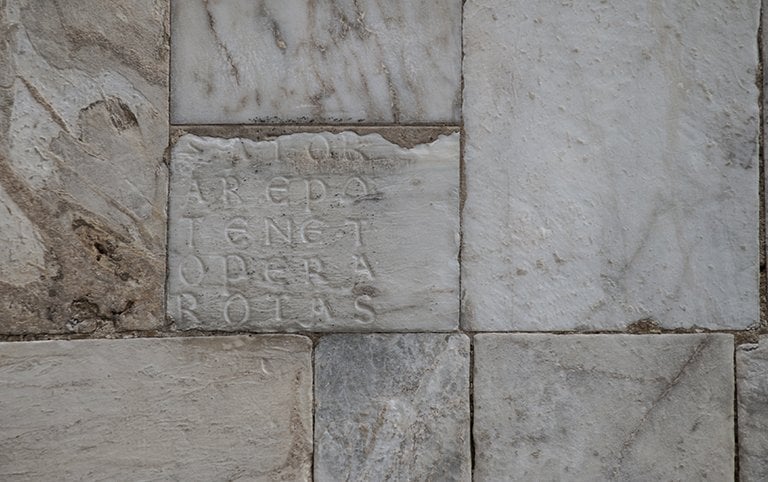
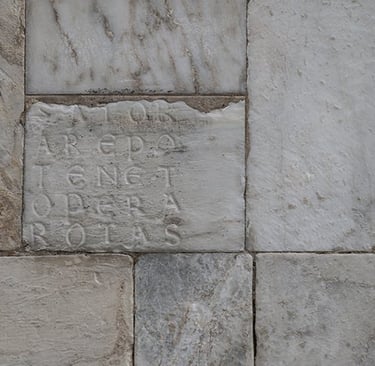
On the external left wall of the Cathedral (opposite the Archbishop's Palace) carefully search for a small inscription: the mysterious palindrome SATOR square readable in all directions. Also present in Pompeii and European churches, in the Middle Ages it was believed to have magical powers against rabid dogs. Templar symbol, Christian prayer, or Kabbalah? The mystery resists for centuries.
The White Stone Line
In Cathedral Square a "line" of white stones crosses the space in front of the cathedral. It's not an old parking lot but the boundary established in 1378 to end the dispute between Cathedral canons and hospital friars over burial rights. Pope Urban VI himself ratified this division in 1379: the line has been there for 645 years.
Madonna of the Crow
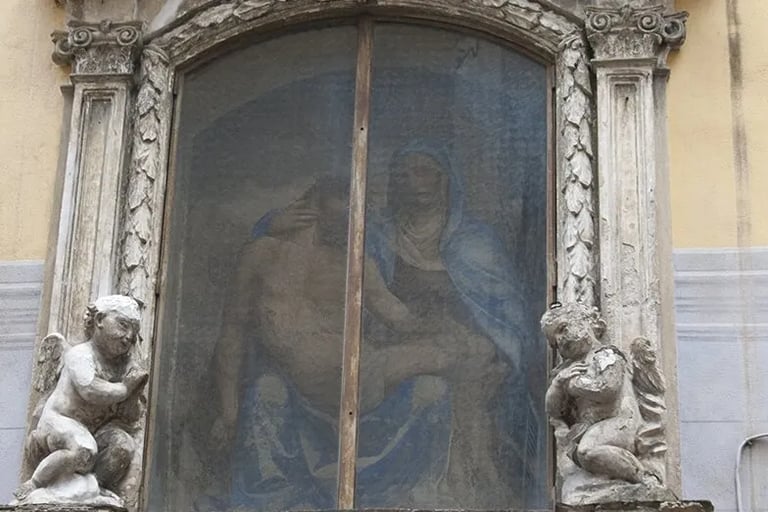
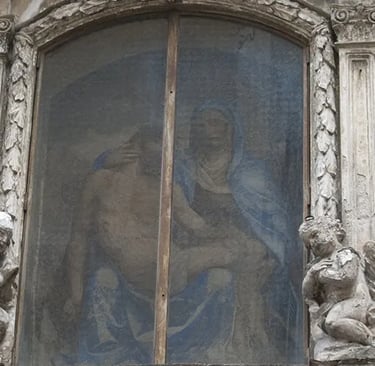
On Via Stalloreggi, on the left going up toward the Cathedral, stop at Sodoma's tabernacle (early sixteenth century) with the Pietà. Tradition says a plague-infected crow died struck by lightning landing on the fresco, preventing the plague from spreading in the city. More likely the "crow" is the poorly painted eagle of the Marescotti coat of arms, family that owned the palace. But legends make Siena magical.
Friar Giomo's Ghost
At Via delle Cerchia 50, a bearded and wild-eyed marble head is walled in a niche. According to legend it would be the Camaldolese friar Giacomo "Giomo," who died in battle in 1208 (or hanged in the sixteenth century for a relationship with a nun, second version). His ghost would appear at the Botanical Garden and on this street. At night some swear to feel his presence.
The Mangia Automaton
In the Courtyard of Podestà (Palazzo Pubblico, free access) you'll find what remains of the automaton that struck the hours on the Tower from 1400. After centuries of service it was removed in 1780 and forgotten in a governor's villa. A century later the great-grandson found it in a dried-up ditch, restored it, and donated it to the city. Today it watches you motionless, silent witness of centuries of history.
📍 Podere advice
These secrets aren't marked. Use Google Maps to locate them or ask the Sienese: they love telling their city's stories.
EVENING: APERITIVO AND ATMOSPHERE
Piazza del Campo at Sunset
Return to Campo for aperitivo. Sitting on the "shell" at sunset while shadows lengthen on medieval palaces is an experience you won't forget. Places on Campo are touristy and expensive, but the atmosphere is worth a drink's price. Otherwise bring something to drink and sit on the square like the Sienese do: it's allowed.
Contrade Celebrations
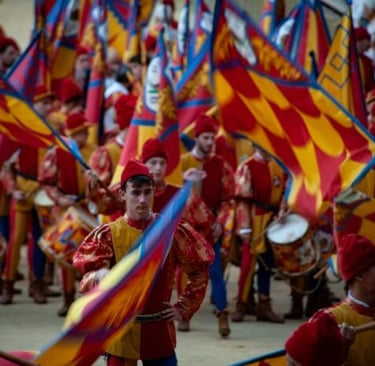
If you visit during pre-Palio period or contrada festivals, streets come alive with flags, songs, and outdoor dinners. Each contrada has its patron feast during the year. The atmosphere is engaging even for outsiders, though the celebration's heart remains among contrada members.
PRACTICAL INFORMATION
📍 Distanza dal Podere
How to get there:
From Chiusi: 80 km, 1 hour by car via SP146/SR2. By train: change at Chiusi-Chianciano Terme, about 1h30.
Parking:
Historic center is ZTL (Limited Traffic Zone).
Recommended parking:
- La Stazione: €2/full day, free escalators to center (cheapest)
- Il Campo: €35/day (€25 with hotel), very close to Piazza del Campo
- Stadio-Fortezza: €26/day, large and convenient from north
- Santa Caterina: €35/day, escalators to center
- Free: Strada Laterina (near cemetery), Il Campino (Viale Veneto under Fortezza Medicea, 10-minute walk from Campo)
⏱️ To know
Siena isn't visited, it's lived. Get lost in alleys, sit at Campo without rush, enter minor churches, observe contrada coats of arms. The city gives you magic only if you give it time. If you can, stay until evening: when lights turn on and tourists leave, Siena reveals its true soul.
During Palio the city goes crazy: if you want to live this unique experience prepare for crowds, emotions, and energy you won't find elsewhere. But even on normal days Siena maintains that proud character and timeless beauty that conquered the medieval world.
🌅 Seasonal tips
- Palio (July 2 and August 16): transformed city, impossible parking, high prices, unique atmosphere. Book everything months ahead
- Spring/autumn: perfect weather, fewer crowds, often uncovered Cathedral floor
- Summer: hot but lively, evening events, Cathedral floor visible
- Winter: cold but charming, few tourists, low prices, Christmas lights
Time needed:
Full day minimum. To visit calmly and savor the atmosphere you need at least 8-10 hours or a weekend.
Ready for Siena?
Siena awaits you with its medieval secrets, Renaissance art, and the unique atmosphere of the Palio city. A day that will stay in your heart.