Val d'Orcia: The Grand Villages Tour
The complete itinerary for those who want to explore the heart of UNESCO Tuscany
Val d'Orcia has been a UNESCO World Heritage Site since 2004, but its true heritage isn't in official plaques: it's in stone villages clinging to hills, squares where time stopped at the Renaissance, cellars carved into tufa where wine has been aging for centuries.
This is the itinerary for those who want to see the real Val d'Orcia: the one with climbing alleys, cheeses aging in caves, fortresses from which you can embrace half of Tuscany. Seven stops among central Italy's most beautiful.
No need to rush. Just bring curiosity.
A territory to explore calmly
Seven stops in one day are many, but distances are short and scenic roads are part of the experience.
You can do everything in one long day (early morning departure, evening return) or split the tour into two days sleeping in Montalcino or Montepulciano.
The important thing is not to rush: every village deserves at least an hour, wineries require time, and views ask for breaks. Val d'Orcia rewards those who know how to slow down.
STOP 1: MONTICCHIELLO
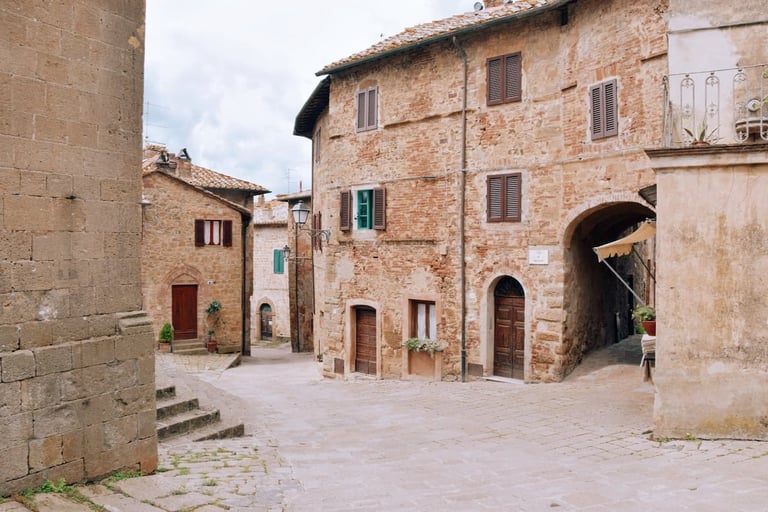
Small, intact, authentic. Monticchiello is one of those villages where it seems no one was ever in a hurry to change anything. Medieval walls embrace the town, alleys are narrow as corridors, and from the ramparts the view embraces the entire valley to Montepulciano.
Every summer, Teatro Povero takes place here: village inhabitants stage plays written by them, acted by them, set in the village streets. It's one of the most authentic examples of Tuscan popular theater.
🏰 Podere's advice
Walk the complete circuit of the walls: it takes 10 minutes but gives you a 360° perspective of Val d'Orcia. Every angle is a different postcard.
🍽️ Where to have lunch
La Guardiola Wine & Food - In the village center. Homemade cuisine with valley views. Perfect to start the day without taking too much time.
STOP 2: PIENZA
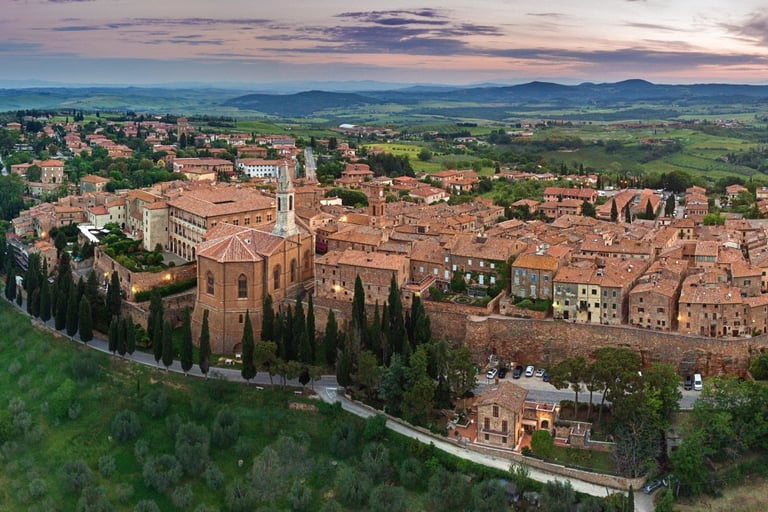
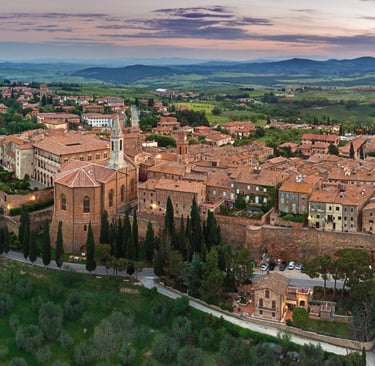
Pienza is an architectural experiment: Pope Pius II transformed it in the 1400s into the Renaissance "ideal city." Piazza Pio II is the perfect geometric heart, with the Cathedral, Palazzo Piccolomini, and Palazzo Comunale facing each other in symmetry.
But Pienza today is above all the kingdom of pecorino: every shop in the center sells cheeses aged in tufa caves, some with walnut leaves, others with truffle, others aged for months in humid cellars. The scent fills the streets.
The panoramic terraces behind the cathedral offer a valley view that makes clear why Pius II chose this place.
🧀 What to take home
Center shops sell pecorino in all aging stages. Ask to taste before buying: each wheel has different flavors. Truffle pecorino is the bestseller, but classic semi-aged is what locals prefer.
🍽️ Where to have lunch
Buca delle Fate - Traditional trattoria in the village heart. Pici all'aglione, farro soup, grilled meat. Family atmosphere, honest prices.
🍽️ If you're looking for panoramic view
La Terrazza dei Chiostri - Breathtaking Val d'Orcia view. Refined cuisine, more elegant setting. Book and ask for outdoor table.
STOP 3: SAN QUIRICO D'ORCIA
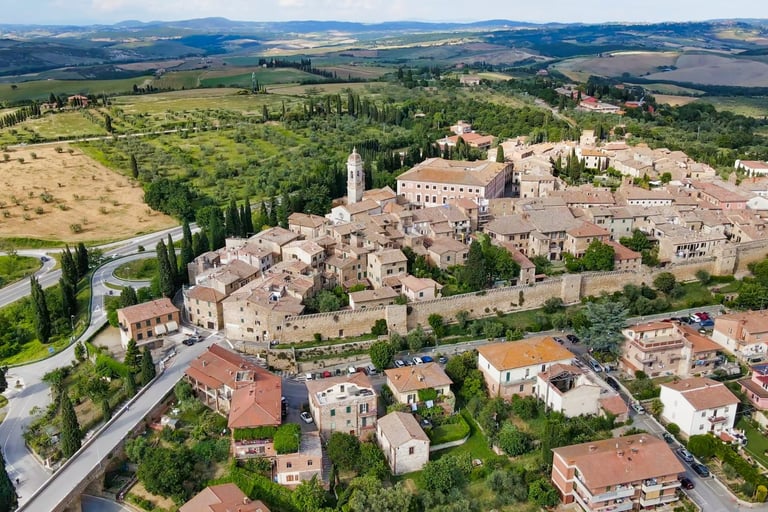
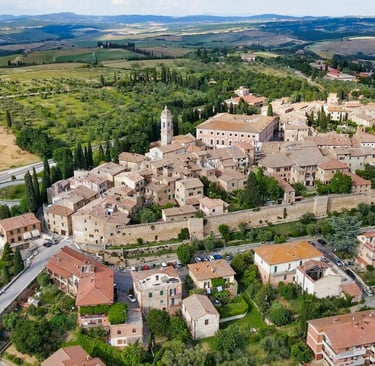
San Quirico lives on two souls: the medieval one of the historic center and the Renaissance one of the Horti Leonini, perfectly preserved 1500s Italian gardens. Walk among geometric boxwood hedges while the stone village watches from above.
The Collegiate Church of Saints Quirico and Giuditta is a Romanesque masterpiece with carved portals telling stories of saints and dragons. Worth visiting just for the door details.
Outside the center, along Via Cassia, you'll find the cypresses of San Quirico: an avenue of centuries-old cypresses less known than the iconic road, but perfect for a 15-minute walk through the fields.
🌲 Don't miss
Horti Leonini have free entrance. Go in, sit on a shaded bench, and enjoy the silence. It's one of Tuscany's most beautiful historic gardens, but almost empty of tourists.
🍽️ Where to have lunch
Il Vecchio Forno - Homemade bread, family atmosphere, simple and genuine cuisine. Perfect for a quick break.
🍽️ Traditional trattoria
Da Ciacco - Classic Tuscan cuisine, generous portions, informal atmosphere. Book on weekends.
STOP 4: VITALETA CHAPEL
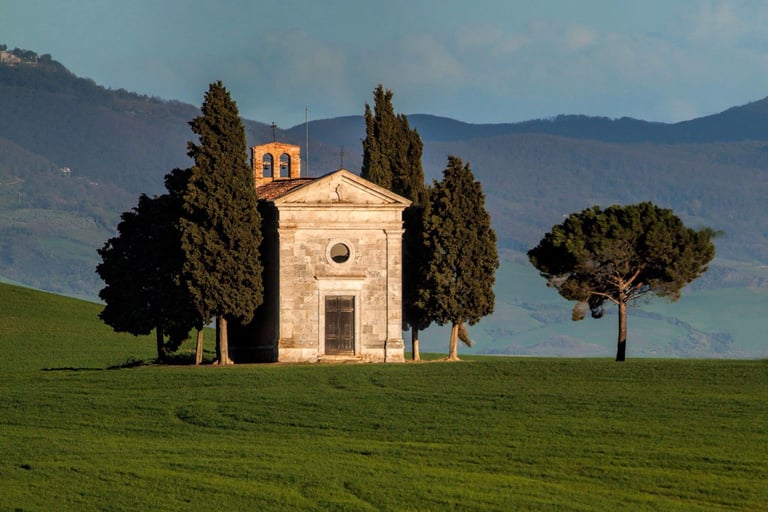
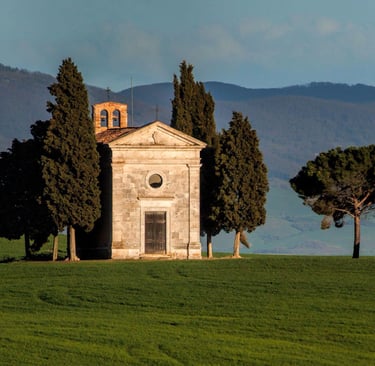
Small, perfect, alone in the middle of fields: the Vitaleta Chapel is the image everyone associates with Val d'Orcia. Built in the 1500s and restored in the 1800s, it's surrounded by cypresses that seem placed there by a painter.
The chapel is closed to the public, but you don't need to enter: the value is all in the surrounding landscape. It's one of those places where you understand why Val d'Orcia is a UNESCO heritage site.
🌅 Best perspective
The most photographed spot is from the road coming from San Quirico. But if you want a different perspective, walk behind the chapel: from there you'll see the cypresses backlit with hills in the background.
STOP 5: BAGNO VIGNONI
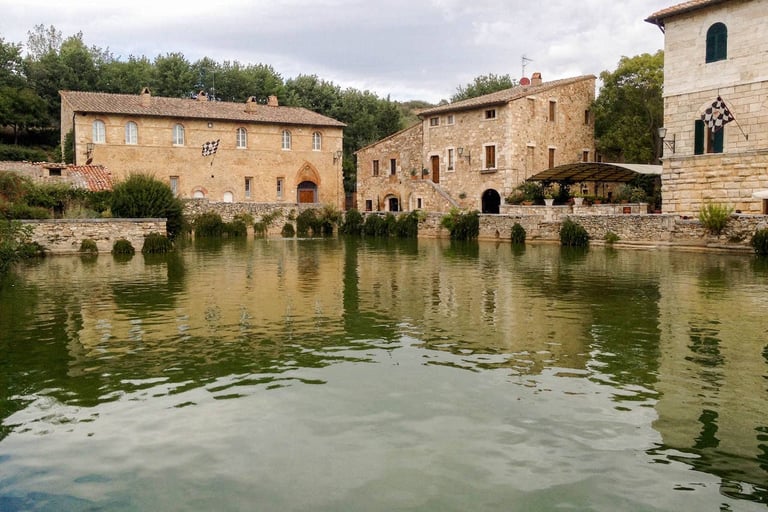
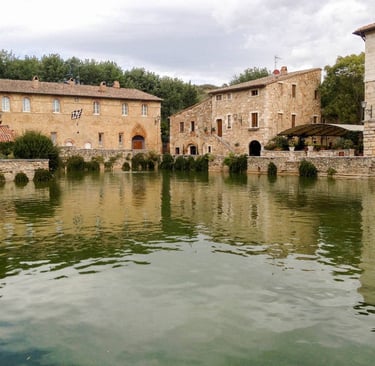
Bagno Vignoni is unique: instead of a central square there's a steaming thermal pool measuring 49 by 29 meters, fed by hot springs reaching 52 degrees. Water has flowed here for millennia: Romans used it, Lorenzo the Magnificent came here for treatment, Saint Catherine of Siena prayed here.
Today the pool is closed for bathing (it's a historic monument), but below the village there's the Parco dei Mulini: a natural area with free pools where thermal water flows through vegetation. Free entrance, magical atmosphere.
The village itself is tiny but perfect: a few stone houses, a portico embracing the pool, and a silence that seems suspended.
💧 The secret few know
Go down to Parco dei Mulini (5-minute walk from village). The stone pools where thermal water flows are accessible and free. You can take off your shoes and soak your feet in warm water while the sun sets.
🍽️ Lunch with thermal view
Loggiato - Directly overlooking the water square. Tuscan cuisine, unique location. Book a table with pool view.
STOP 6: MONTALCINO
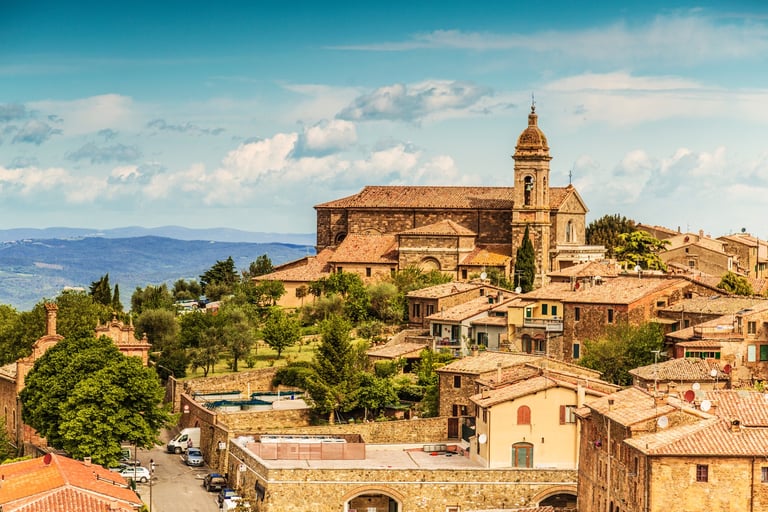
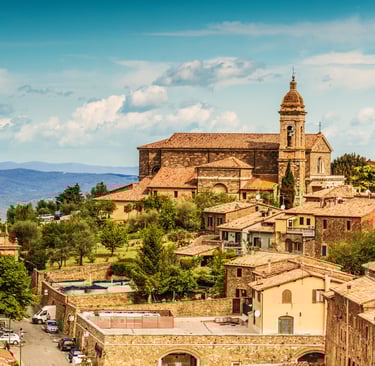
Perched at 564 meters, Montalcino dominates the valley with its 1300s medieval Fortress, one of Tuscany's best preserved. From the walls, the panorama embraces all of Val d'Orcia, the Crete Senesi, and on clear days, all the way to Monte Amiata.
But Montalcino is above all the kingdom of Brunello, one of the world's most prestigious red wines. Historic cellars in the center offer tastings, but for an authentic experience it's worth leaving the village and visiting family wineries.
The village is elegant without being ostentatious: stone alleys, historic wine shops, quiet squares. Intimate atmosphere, perfect for enjoying a glass of wine watching the sunset from the walls.
🍷 The experience worth the trip
Cantina Salvioni - Small family winery producing one of Italy's most prized and sought-after Brunellos. Tasting by reservation in intimate setting. It's not touristy: it's real. Book 2-3 days in advance. Ask to speak with Giulio Salvioni if available: he's a Brunello encyclopedia.
🏰 Don't miss
Climb onto the Fortress walls (paid entrance but cheap). From up there the view is 360° and you'll understand why Montalcino was impregnable for centuries. Inside the fortress there's a wine shop where you can taste Brunello with a view.
STOP 7: MONTEPULCIANO
Montepulciano is one of Tuscany's most spectacular villages: its streets climb spirally toward Piazza Grande, passing among Renaissance palaces, artisan shops, historic wine shops, and underground cellars carved into tufa.
Vino Nobile di Montepulciano here is history: families producing it for generations guard labyrinthine cellars under the historic center. Visiting them is like entering the beating heart of Tuscan wine tradition.
The village itself is an open-air museum: Palazzo Comunale (climb the tower for the view), Cathedral, Church of San Biagio outside the walls (Renaissance masterpiece).
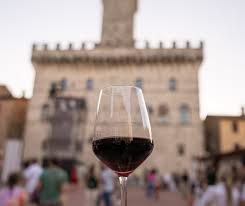
Underground cellars carved into tufa, labyrinth of galleries under the historic center. Guided Vino Nobile tasting with underground visit. Evocative, almost mystical atmosphere. Reservation required.
🍷 Cantina Contucci (alternative)
Historic palace in Montepulciano's heart with 1500s cellars. Vino Nobile tasting in solemn yet welcoming setting. It's one of the most famous historic cellars. Reservation recommended.
🧀 Shopping stop
Caseificio Cugusi 10 minutes from Montepulciano, Caseificio Cugusi produces artisanal pecorino aged in caves. Fresh, semi-aged, aged in walnut leaves cheeses. You can taste before buying. This is the pecorino locals buy for themselves, not the touristy center version. Montepulciano view included.
🍽️ Where to have dinner
🍽️ Osteria Acquacheta
Giant Florentine steak served on wooden cutting board, convivial and noisy atmosphere, shared tables. Very Tuscan experience. ALWAYS book, it's always full.
🍽️ Il Teatro (refined alternative)
Creative cuisine with traditional base, elegant but not formal setting. Excellent quality-price ratio.
🍽️ Rosso Rubino Trattoria (nudget alternative)
Traditional trattoria, homemade cuisine, honest prices. Perfect for those seeking authenticity without frills.
🏰 The secret village: Montefollonico
10 minutes from Montepulciano there's Montefollonico: medieval village with intact walls, zero tourists, total peace. If you still have 30 minutes, recommended detour. It's the Tuscany no one photographs but everyone seeks.
INFO SECTION
📍 Distance from Podere
First stop (Monticchiello): 35 min Last stop (Montepulciano): 25 mi.
Podere Grotta Antica is the perfect base to explore Val d'Orcia without driving too many kilometers.
⏱️ Recommended duration
Full intense day (8-10 hours)
Or split into two days with overnight in Montalcino/Montepulciano. Wineries require reservation and time, every village deserves at least an hour.
🌞 When to go
Year-round, every season has its charm
Spring: flowering fields, soft light
Summer: golden wheat, intense heat
Autumn: harvest, warm colors
Winter: poetic fogs, deserted villages
Avoid August weekends if you hate crowds.
Ready to explore the heart of UNESCO Tuscany?
Start from Podere Grotta Antica and discover why Val d'Orcia is a World Heritage Site.